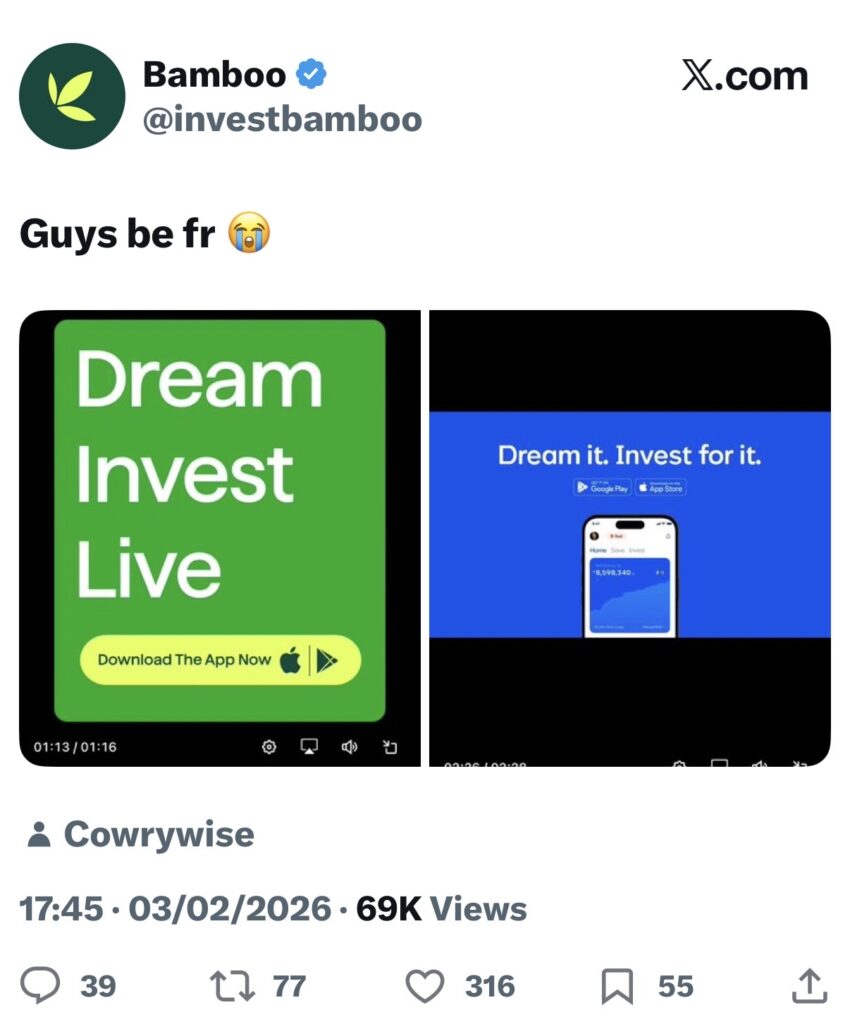
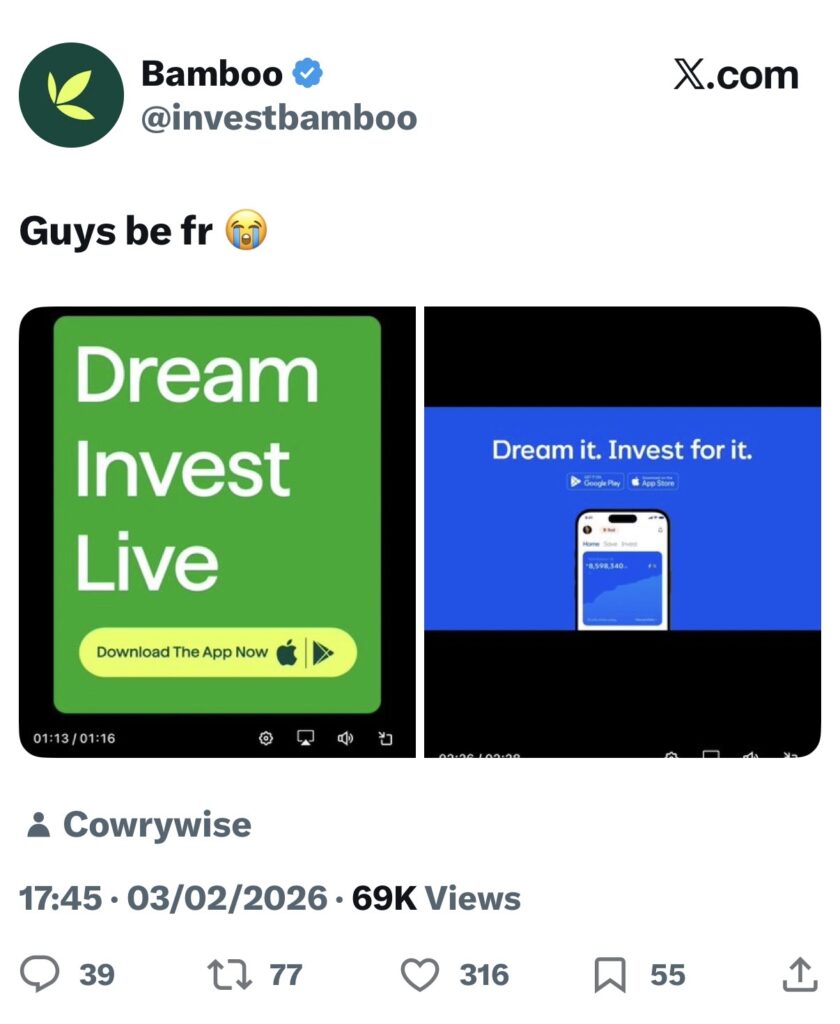
A few days ago, Bamboo called out Cowrywise for putting the “copy” in copywriting. They shared a screenshot of their ad with the line “Dream, Invest, Live“ side by side a Cowrywise ad that similarly, (but perhaps more simply) reads “Dream it. Invest for it.” with the caption “Guys be for real????” directly accusing Cowrywise of imitation.
There have been some hot takes on creative theft and a few think pieces on the “originality crisis” in marketing campaigns, but me thinks there are a few unexplored angles here to examine.
Angle 1: Is this really a copy crime? Real marketing OGs know that while the general wisdom on creative ideation is to steal from outside your niche, eventually in any given industry, everyone ends up saying the same thing(s). Nike tells you to “Just Do It.” Adidas says “Impossible Is Nothing.” Every fintech promises to “empower” you. Every neobank wants to help you “take control.” and “break up with your high street/traditional bank” Scroll through the ad libraries of any two competitors and you’ll find a great deal of overlap. In the end, we’re all going to encourage the audience to aspire, dream, be empowered, and live. Originality in messaging is rarer than anyone wants to admit.
In this specific case, Cowrywise’s ad actually does a better job of landing the value proposition. It’s clearer, more direct and more expository copy. If there’s such a thing as a good way to copy, this is it.
Angle 2: The Audience decides
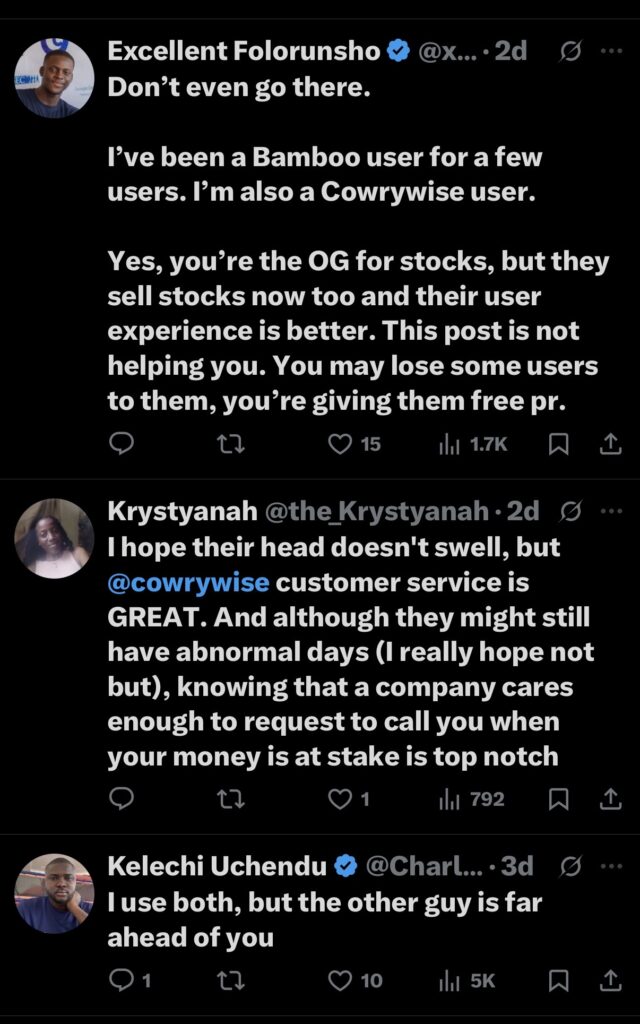
Here’s where it gets interesting. A large portion of the audience didn’t agree that the call-out was necessary. Many quickly shifted away from the copy debate and towards Bamboo’s customer experience. The comments were riddled with complaints about their customer service and worse, claims that Bamboo has bigger problems as many believe Cowrywise is edging them out on UI and overall customer experience.
Instead of rallying support and maybe even a major “let them cook” internet moment, the comment section became a negging feedback forum. Certainly not the reaction Bamboo was aiming for.
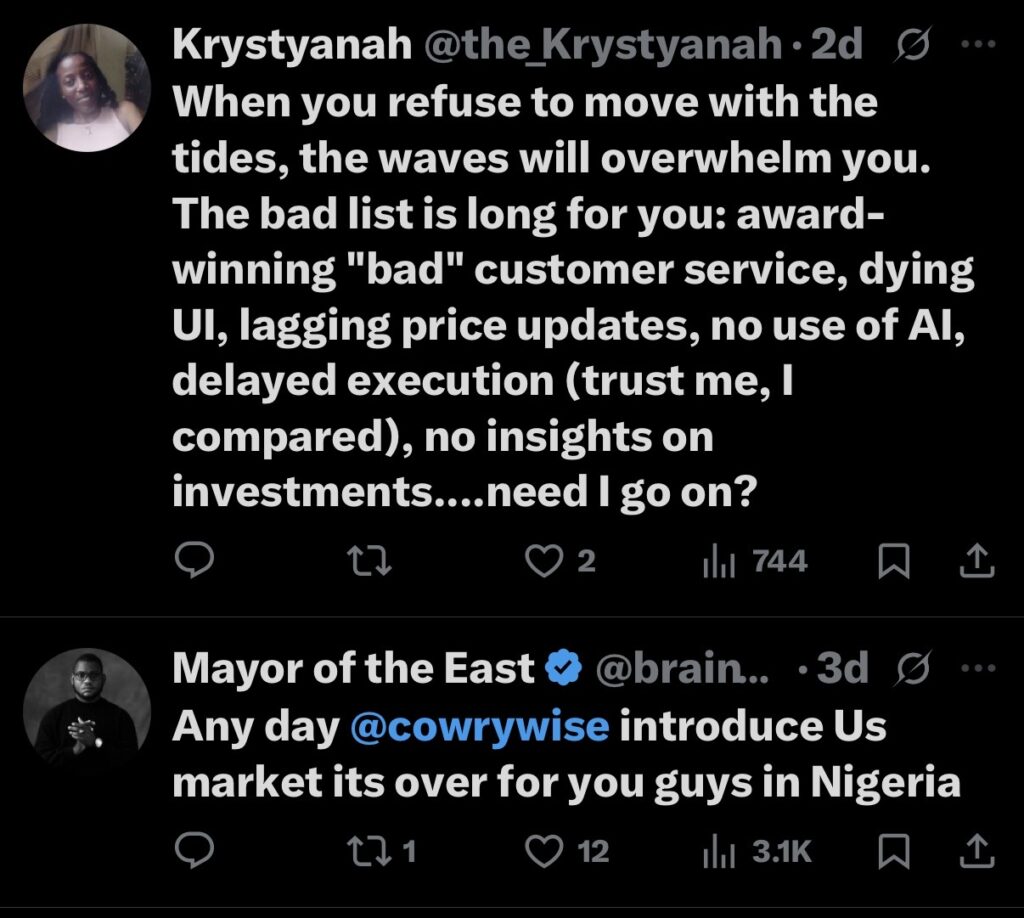
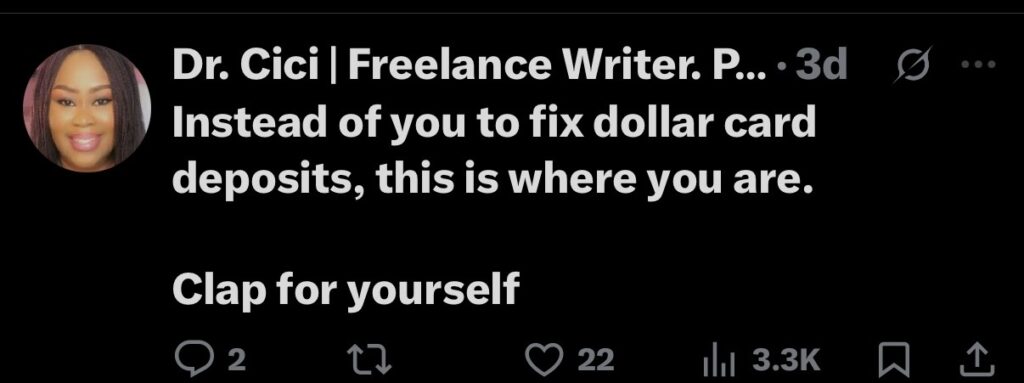
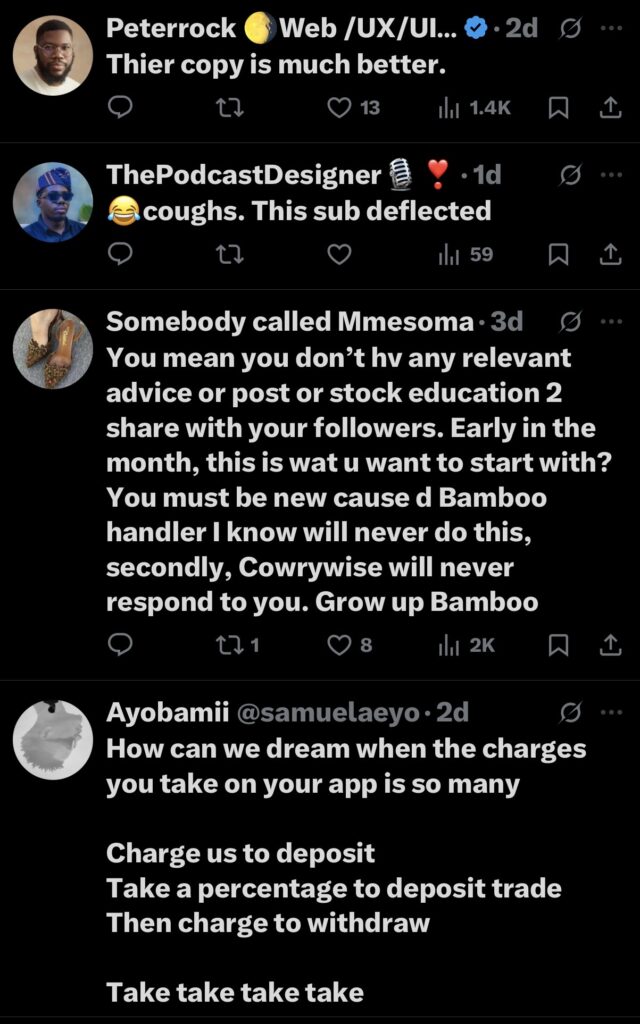
That’s ultimately the risk with public call-outs. You’re handing the mic to your audience and hoping they use it to back you up. The reality is that audiences (especially audiences on Twitter) rarely follow scripts. They’ll take the opening you’ve created and redirect it toward whatever they actually care about.
In conclusion, If you’re going to call a competitor out, remember that it’s the audience who ultimately decides what the real conversation will be.
So good. I don’t feel sorry for them. They were chasing clot. They got what they were looking for haha!
Haha! Agree Ajoke. Good learning for everyone involved tbh.